Why You Should Read The Silmarillion

By Andrew Snyder
Whether you have read the books or only seen Peter Jackson’s movies, the odds are that you have at least a basic familiarity with The Lord of the Rings. These odds are increased by the fact that you opened this article. It is often assumed that finishing The Return of the King marks the end of one’s journey with Tolkien, to which I respond with movie Gandalf’s line, “End? No, the journey doesn't end here.”
The Silmarillion. To many, this text is utterly unknown. To others, it piques interest, but looms as a daunting force as formidable as the fortress of Angband (which is a reference you will one day understand). Unfortunately, this off-putting characterization is often pushed by large “LotR meme accounts” that are aimed at nothing more than engagement. However, for those who have traversed its pages, from the beautiful glory of the Ainulindalë, the creation account of Tolkien’s world and the beginning of evil, to the awakening, glories, failures, romance, and redemption of Elves and later Men, to the rise and fall of the Atlantean Númenóreans and the first downfall of the Dark Lord Sauron, The Silmarillion is an epic like no other. In a letter to the publisher Milton Waldman, Tolkien shares his early intentions for his legendarium as follows: "I had a mind to make a body of more or less connected legend, ranging from the large and cosmogonic, to the level of romantic fairy-story – the larger founded on the lesser in contact with the earth, the lesser drawing splendour from the vast backcloths.”
With a particular aim of creating an English mythology, Tolkien interweaves grand metaphysics with the particular and the heartening. This allows particular characters and events to shine with the cosmic significance that individuals always carry, yet the grand does not consume the lesser, nor is the grand lost in abstraction. Tolkien has, by himself, produced the kind of work that has historically required the collected wisdom of an entire people spread across centuries. As with any collection of such myths and legends, some sections may resonate with you more than others, but all carry the weight - and excitement - of a grandeur that merits our attention.
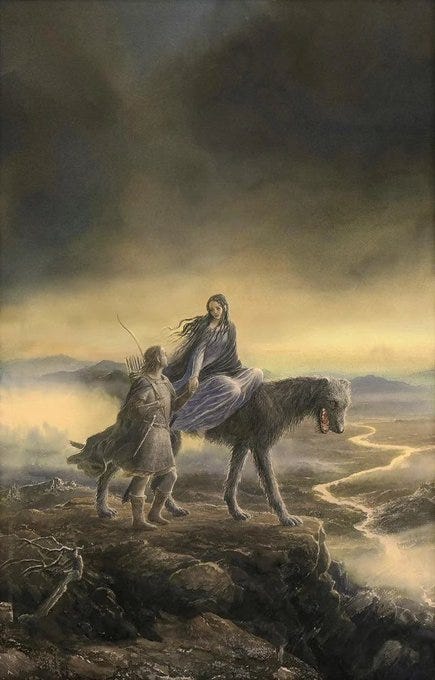
It is true that The Silmarillion is not a summer beach read, but do not let the memes prevent you from venturing forth. The truth is that if you can read The Lord of the Rings, you can read The Silmarillion. They are written in different styles, with the former focusing on a very specific time within the Third Age of Middle-earth and the latter covering a significantly larger scope of time, events, and players. This main difficulty with this genre comes from keeping track of names, many of which are similar. However, as long as you have patience, such things come together for you as you continue through the narrative.
Now that you have some idea of what The Silmarillion is and that you can read it, the question remains: Why should you read it?
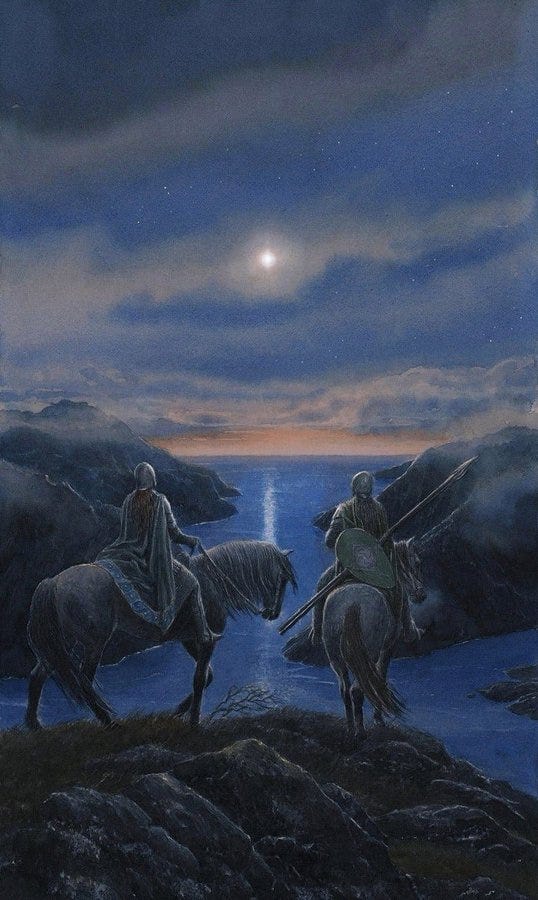
The simple answer is because Tolkien wanted it to be read. His original intention, expressed in the earlier cited letter to Milton Waldman, was that The Silmarillion would be published along side The Lord of the Rings because they are such interdependent texts. The Silmarillion was not intended to be “extra” material just for the nerds, but rather the fundamental context for The Lord of the Rings. It is here that we learn of the rise and initial fall of Sauron, the founding of Gondor, the origin stories of Gandalf and Saruman, and the reason for the Elves’ departure, much lamented by Sam as he and Frodo journeyed through the Shire. It is here that we learn of Elbereth, the Lady of the Stars invoked by the Elves and twice by Frodo, and Eärendil the Mariner, whose light shines into the darkness of Shelob, offspring of the primordial evil Ungoliant. While it is true that The Lord of the Rings is a masterpiece in its own right, it is but the ending of a story that began long ago, both as a narrative within Tolkien’s legendarium and as a creative germ within Tolkien’s imagination. Afterall, the first enduring character of Tolkien’s legedarium was not Frodo or Bilbo Baggins, but Eärendil, who navigated from the ~9th century Anglo-Saxon Crist of Cynewulf:
Hail Éarendel, brightest of angels,
above the middle-earth sent unto men,
and true radiance of the sun,
bright above the stars – thou of thy very self
illuminest for ever every season!
With this imagery, Tolkien’s own Middle-earth began to take shape. When we return to the source material, born of philology, a love for myths and legends, escapism in the war-torn trenches, and genuine inspiration, the more familiar story of The Lord of the Rings becomes even richer in enchantment and, dare I say, reality. "After all,” Tolkien writes to Waldman, “I believe that legends and myths are largely made of 'truth', and indeed present aspects of it that can only be received in this mode; and long ago certain truths and modes of this kind were discovered and must always reappear."
Pick up The Silmarillion. Read it. Savor it. Delight in it. Let it break your heart. Let it mend your heart. Let it inspire you with hope and courage that is not put to shame by the Shadow.
Read it by yourself if you must, but I encourage you to read it in community with others that its value be multiplied within good fellowship. Join Mythic Mind and travel through our 8-week study of The Silmarillion, which ran at the beginning of 2026. Become a Fellow or Companion to access all of my previous courses. Getting access will provide you with 18 videos, including my reading companion videos and recordings of our live conversations.
Andrew Snyder is a professor of theology and philosophy, founder of the Mythic Mind Fellowship, and host of all three Mythic Mind podcasts.